Showing posts with label social issue. Show all posts

April 14, 2014

In India... If u Want your rights? Repeal the laws


India’s obsession with passing new laws to get rights really annoys me. Is it really tough to understand that we as humans already have rights? We don’t need state’s approval to have food or education. We don’t need a new law to practice our rights as long as we’re not hurting some other person’s rights. If I want to get educated or get food without hurting some other person’s rights, I can just go ahead and do it! Every time a new law is enacted, it is projected as if it is giving Indians some new “right to food” or “right to education” or “right to sell stuff on streets”. However, in reality it only takes away the rights of others in some manner. Let me discuss two recent laws which annoy me the most.


1.   “Right to Food Act”


Really? Do you see the name used to popularize the act among people? It is actually named “National Food Security Act, 2013”. In reality, neither does this bill give you a “right to food” nor does it “secure food for the nation”. If we read the bill we will see clearly that it subsidizes food for 75% of rural and 50% of urban population. Who comprises that is left for the government to decide. Nevertheless, let us remind ourselves that government does not have any money of its own which it uses to subsidize things. It acquires most of its funds through indirect taxes. Indirect taxes suck up a higher percentage of an economically poorer person’s income when compared to an economically richer person. So in short, this law taxes the poorer and subsidizes the food for the richer. It is increasing the income disparity among the rich and poor under the pretext of the famous “reducing the gap between rich and poor”. Also, the cost at which rice, wheat and millet is being promised under the act is far less than the actual market cost of these foods. So, producing these costs more than what selling them costs and the whole country is bearing the loss. Oh! And do not say its subsidized, coz as mentioned above; you now know how subsidy works. With proposed reforms in the Public Distribution System (PDS) and formation of the State Food Commissions to ensure that the act is implemented, the cost of implementation of this act on paper is estimated to be $22 Billion (1.25 lac crore rupees). Well, that’s what is ‘on paper’. We all know how things work in India. There is one system which is intended to be and then there is another which actually is.


2.  Right to Education Act”


“Yay! So now we have a ‘right’ to education.” Period! This act is actually named “The Right of Children to Free and Compulsory Education Act”. Firstly, what can be ‘free’ and ‘compulsory’? By ‘free’ it surely does not mean that children are free to opt or not opt for it, it means without money. If you continue to believe in the word ‘free’ education, ‘free’ health care etc. after reading above how subsidies work in India, please spare me and do not read this article any further. The education under this act is not only ‘subsidized’ but also ‘compulsory’! So you might be put behind bars if you opt out of it! You have to get your children educated. This reminds me of a case I heard from a friend where a Russian who was detained by the Soviet Union was released years later when he grew old and the reason for his release was that he no longer can work and contribute to the country so he is no more the property of Soviet Union. I see the same principle applied here. So, people are the property of the state? A state who can force compulsory education on them on the pretext that they cannot decide what is good for them. We all know a government is not made of some super intelligent experienced people who have all the good intentions to work for people. They’re rather people like you and me who desire a living and have a family to feed. The only difference being that those men are power hungry. And does that make them eligible enough so that they can leave no room for choice by poor people and impose what they feel is right? As far as child labor is concerned, it is worthy to note how child labor came to an end in America. It is a flawed analogy that if we force children to go to school, they won’t be able to work and thus we reduce child labor. Rather, children who have to work will anyways work, now, in poorer conditions in hiding with threat to their and their parent’s lives and with bribing for survival. Conditions for them are now worse! Well, that was my rant over just the title of the bill. Now let’s look within. The act makes it mandatory for the private schools to reserve 25% seats for ‘disadvantaged’ children. Although constitutionality of this clause is being debated in the Supreme Court but I have little faith on it being removed as the Solicitor General and the Additional Solicitor general argue in favor of this clause saying that this is in line with the basic structure of the socialist scheme of the constitution. When lawyers advocate socialism in courts, how much of individual freedom can we expect from the system? I don’t understand how lawyers employed by the government are expected to fight for justice even though it maybe against the government. Will you fight a case against your employer? Or, if you want to, will you continue to be in employment? Isn’t this simple logic? Anyway, why is 25% reservation is private schools a problem? They have such high fee after all! For people who don’t know, in India you can’t run a school or a College ‘for profit’. At least, legally! Also of course if a class which had 100 students paying for the education, now has only 75 students paying with rest 25 free loader students. So who do you think is going to pay for those 25 kids’ education? Charity is good but is it moral enough to mandate charity on people even if they don’t wish to do it? Let me make one more thing really very clear here and now. Since I’m against forcing people paying for some unknown kids’ education, it does not mean that I want those kids to remain uneducated for life. Please see the difference here, I only mean that this is not the right way to get them education. Most people who are ‘for’ such education welfare schemes are actually ‘for’ it because they think the poorer children should also have an opportunity to get educated. I too think so. But the “Right to Education” Bill closes other doors of such opportunity for these kids. When I say “private school”, most people imagine the big expensive private schools with huge fields and classrooms equipped with the most modern technologies. Very few would know that there are “small budget private schools” in our country and under our “right to education” laws these schools are illegal. These schools are illegal because they cannot meet the standards which a private school should have under government laws. So, our fantastic education laws first prohibit small budget schools from operating, then mandate big expensive private schools to have 25% reservation or the poorer kids. Not only that, most poorer kids who want to get educated can avail education only in the Government schools of their locality which might be having the standard playing grounds, numbers of tables and chairs but definitely not so good teachers, in fact, let me say that clearly, bad teachers. What I don’t get is people’s obsession with passing new laws. New laws are not the solution. Repealing the old ones is. If you want a right, see what is prohibiting it and just get rid of it. I think almost every Bollywood fan would have hummed this song from Rockstar but did you ever actually get into the ] lyrics where it says:

“Marzi se jeene ki bhi main
Kya tum sabko arzi dun
Matab ki tum sabka mujhpe
Mujhse bhi zada haq hai”

Come on people, you can’t deny the fact that you own yourselves coz you do and you know it. As long as you are peacefully living your life, no one has the right to decide things for you and similarly you do not have the right to decide things for others. As far as making mistakes in life is concerned, everyone does that. When you or I make a wrong decision if affects our lives. But when a politician or a policy makes a wrong decision and imposes it on others, it ruins many lives. People in the government are like you and me and they too make mistakes. It’d be smarter to let individuals take decisions for themselves and make mistakes which affect them rather than trying to protect them and giving power to one person (who we call representative) to make mistake on all of us’ behalf. Remember your teenage and remind yourselves.


“There is no freedom if you do not have the freedom to make mistakes.”


March 26, 2014

Congress Report Card - List of A to Z scams in congress governance


List of Scams – In India

India is considered as the largest democracy in the world. But still it is not free from corruption and scandals. A few politicians and big business houses join hands and rob the hard earned money of these citizens to generate enormous amount of wealth. To generate this wealth, such scams take place which the citizens cannot even think of. All major scams since 2003 are listed below:
List of Scams:


A — Ardarsh Scam

B — Bofors Scam

C — CWG Scam

D — Devas-Antrix Scam

E — Employee Guarantee Scheme Scam

F — Fodder scam, Food Security Bill Scam

G — Ghaziabad Provident Fund Scam

H — Harshad Mehta Stock Market scam, Hasan Ali Hawala Scam

I — IPL Scam

J — Junior Basic Trained Teachers’ Recruitment Scam

K — Ketan Parekh Stock Market Scam

L — LIC Housing Scam

M — Madhu Koda Scam

N — Non-banking Financial Companies Scam

O — Oriental Bank Scam

P — Punjab State Council of Education, Research and Training Scam

Q — Quest for Gold Scam

R — Ration Card Scam, Rafale Jet Fighter Procurement Scam

S — Satyam Scam, Fire Prone Submarine Scam

T — Telecom 2G Scam, Temple Collection Scam, Congress President Travel Budget Scam

U — UTI Scam, UBS Illegal Accounts Scam

V — Volkswagen Equity Scam, Vadra DLF Scam

W — West Bengal Telecom Scam, Westland Helicopter Scam

X, Y, Z  still counting

India Scams – 2013
2013-Agusta Westland Chopper Deal Scam
2013-Vodafone Tax Scandal
2013-Saradha Group Chit Fund Scam
2013-Railway promotion Scam
2013-The Rs 5,500-Crore Scam
India Scams – 2012
2012-Salman Khursid Trust Fraud- Scam
2012-Robert Vadra-DLF Scam
2012-Maharashtra Irrigation Scam
2012-Kinetic Finance Limited Scam
2012-Ultra Mega Power Projects Scam
2012-IGI airport Scam
2012-Andhra Pradesh Land Scam
2012-Forex Derivates Scam
2012-Granite Scam in Tamil Nadu
2012-Service Tax and Central Excise Duty Fraud
2012-Gujarat PSU financial irregularities
2012-Maharashtra Stamp Duty Scam
2012-Maharashtra land scam
2012-MHADA Repair Scam
2012-Highway scam
2012-Ministry of External Affairs Gift Scam
2012-Himachal Pradesh Pulse Scam
2012-Flying Club Fraud – 190 Crore
2012-Andhra Pradesh Liquor Scam
2012-Jammu and Kashmir Cricket Association Scam
2012-Punjab Paddy Scam
2012-NHPC Cement Scam
2012-Haryana Forest Scam
2012-Uttar Pradesh Stamp Duty Scam
2012-Uttar Pradesh Horticulture Scam
2012-Uttar Pradesh Palm Tree Plantation Scam
2012-Patiala Land Scam
2012-Bengaluru Mayor’s Fund Scam
2012-Tax Refund Scam
2012-Coal Mining Scam
India Scams -2011
2011-ISRO Spectrum Allocation Scam
2011-Goa mining scam
2011-Hasan Ali Khan scandal
2011-Noida Corporation farm land scandal
2011-Indian Black Money in Swiss Banks
2011-Bellary mines scandal
2011-Bain India incident
2011-BL Kashyap EPFO Scam
India Scams – 2010
2010-IPL fraud involving swine called Lalit Modi option was worth?
2010-Commonwealth Games loot is worth?
India Scams – 2009
2009-Jharkhand Medical equipment scam was worth Rs 130 Crores
2009-Rice export scam was worth Rs 2500 Crores
2009-Orissa Mine scam was worth Rs 7000 Crores
2009-Madhu Koda scam was worth Rs 4000 Crores
India Scams – 2008
2008-Pune Billionaire Hasan Ali tax default scam was worth Rs 50,000 Crores
2008-Satyam Scam was worth Rs 10.000 Crores
2008-Army Ration Pilferage Scam was worth Rs 5000 Crores
2008-2G Spectrum Scam was worth Rs 60.000 Crores
2008-State Bank of Saurashtra Scam was worth Rs 95 Crores
2008-Illegal money in Swiss Bank is worth Rs 71, 00,000 Crores
India Scams- 2006
2006-Punjab’s city centers project scam
2006-Taj Corridor Scam was worth 175 Crores
India Scams – 2005
2005-IPO Demat Scam was worth Rs 146 Crores
2005-Bihar food relief Scam was worth 17 crores
2005- Scorpene submarine Scam was worth Rs 18,978 crores
India Scams – 2004
India Scams – 2003

March 19, 2014

THE GLOBAL SLAVERY INDEX


OVERVIEW
The Global Slavery Index provides a ranking of 162 countries, reflecting a combined measure of three factors: estimated prevalence of modern slavery by population, a measure of child marriage, and a measure of human trafficking in and out of a country. The measure is heavily weighted to reflect the first factor, prevalence. A number one ranking is the worst, 160 is the best.
Mauritania, a West African nation with deeply entrenched hereditary slavery, is ranked number 1 in the Index. This reflects the high prevalence of slavery in Mauritania – it is estimated that there are between 140,000 – 160,000 people enslaved in Mauritania, a country with a population of just 3.8 million. This ranking also reflects high levels of child marriage, and to a lesser extent, human trafficking.
Haiti, a Caribbean nation plagued by conflict, natural disaster and with deeply entrenched practices of child slavery (the restavek system), is second on the Index. This reflects high prevalence of modern slavery – an estimated 200,000 – 220,000 people are in modern slavery in Haiti, a country with a population of just 10.2 million. This ranking also reflects high levels of child marriage, and human trafficking from Haiti itself.
Pakistan, with its porous borders to Afghanistan, large populations of displaced persons and weak rule of law, is third on the Index. It is estimated that there are between 2,000,000 – 2,200,000 people in various forms of modern slavery in Pakistan, a country with a population of over 179 million.
Iceland, Ireland and the United Kingdom are tied with a ranking of 160 in the Index. This does not mean these countries are slavery free. On the contrary, it is estimated that there are between 4,200 – 4,600 people in modern slavery in the United Kingdom alone. The estimated size of the problem in Ireland and Iceland is much smaller, with Ireland estimated to have 300 – 340 people in modern slavery, and Iceland less than 100. An analysis of the UK response on this issue confirms much more can be done, as the Government response is fragmented and disjointed, and that there have been alarming systemic failures, including the loss of trafficked children from care.
Estimated number of population in modern slavery
The Global Slavery Index also provides insight into the estimated absolute numbers of people in modern slavery, in 162 countries. When the estimated number of enslaved people is considered in absolute terms as a single factor, the country ranking shifts considerably.
The countries with the highest numbers of enslaved people are India, China, Pakistan, Nigeria, Ethiopia, Russia, Thailand, Democratic Republic of Congo, Myanmar and Bangladesh. Taken together, these countries account for 76% of the total estimate of 29.8 million in modern slavery.
The country with the largest estimated number of people in modern slavery is India, which is estimated to have between 13,300,000 and 14,700,000 people enslaved. The India country study suggests that while this involves the exploitation of some foreign nationals, by far the largest proportion of this problem is the exploitation of Indians citizens within India itself, particularly through debt bondage and bonded labour.
The country with the second highest absolute numbers of enslaved is China, with an estimated 2,800,000 to 3,100,000 in modern slavery. The China country study suggests that this includes the forced labour of men, women and children in many parts of the economy, including domestic servitude and forced begging, the sexual exploitation of women and children, and forced marriage.
The country with the third highest absolute number in modern slavery is Pakistan, with an estimated 2,000,000 to 2,200,000 people in modern slavery.


March 13, 2014

Your whatsapp chats are not so secure


If you use WhatsApp on an Android phone, you should be careful about what you talk about or share on the instant messaging app. Using a few scripts and a rogue app, anyone can peer into your chat logs and see what you talk about with your friends.

A Dutch security consultant has found that WhatsApp chat logs saved on the SD card of an Android phone can be read by other apps because of the way Android allows sharing of data between apps.

"The WhatsApp database is saved on the SD card which can be read by any Android application if the user allows it to access the SD card. And since majority of the people allows everything on their Android device, this is not much of a problem," Bas Bosschert wrote on his blog.

"What do we need to steal someone's WhatsApp database? First we need a place to store the database," Bosschert explained. "Next thing we need is an Android application which uploads the WhatsApp database to the website."

When an Android application is installed, whether from the Play store or through an APK file, which is an installer file for Android phones and can be downloaded from various sources, the app requests for permissions to use network and SD card etc.

To explain his hack, Bosschert set up a web server and then created an Android application that required several special permissions on a user's phone. But because Android OS allows applications to access various parts of the phone - this is why users can conveniently share almost everything through any app on Android phone - Bosschert's app had no difficulty gaining access to WhatsApp data.

Bosschert wrote that the code that allows his application to access WhatsApp data and then upload it to his web server can be added to a popular Android app by a rogue developer to fool users and steal WhatsApp chat logs.

The older versions of WhatsApp were so insecure that they didn't even encrypt their data stored on SD card. The data from older versions of whatsApp could be read by anyone once it was uploaded on the web server. Even the data from newer version of WhatsApp, which uses encryption, can be accessed with ease.

"The WhatsAppp database is a SQLite3 database which can be converted to Excel for easier access. Lately WhatsApp is using encryption to encrypt the database, so it can no longer be opened by SQLite. But we can simply decrypt this database using a simple python script. This script converts the crypted database to a plain SQLite3 database," wrote Bosschert. "We can conclude that every application can read the WhatsApp database and it is also possible to read the chats from the encrypted databases."

Bosschert joked, "Facebook didn't need to buy WhatsApp to read your chats."

The security issue apparently doesn't exist on iPhones or Windows Phone devices because on these smartphones, apps have limited access to storage and other phone hardware. The more flexible access to phone hardware allows Android apps to talk to each other and helps a user quickly share content between apps. This is very convenient compared to what is possible on iPhone or Windows Phone, where it is difficult to share content between apps. But it also exposes data to rogue apps.

Google says that it keeps an eye on apps inside its Play store and removes apps if they pose any security risks. But this doesn't negate the fact that theoretically it is possible for a rogue app to do more damage on Android because of the open nature of the OS compared to iOS, which uses silos. Google also advises people against installing apps that don't come through Play store. By default Android phones are set to not install apps downloaded outside the Play store.

March 11, 2014

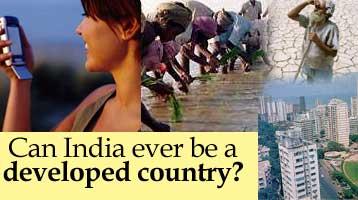
Why India still a developing country?


India got its independence in 1947 and since then the country has been a "developing" country. If anybody was asked what could be the reason for this, pat comes answer that its because of "vested interests of politicians and corruption among law makers and bureaucrats" and this answer is 100% correct. But it would be interesting to analyze what triggered the corruption and how these so called law makers got an opportunity to sabotage country's economy for their vested interests.

March 8, 2014

International world's woman day...........


International Women’s Day, March 8, is here again, and it is time to take stock of women’s lives in the world today.  Great progress has been made in education and for women more broadly.  Still, so much work remains to ensure that women are empowered, educated, safe, healthy and free to be fully participating members of equal societies.  In India, the recent groundswell of support for women and girls speaks to the potential to overturn harmful gender norms.  We need approaches, such as self-organizing and campaigning for

March 3, 2014

Domestic workers lowly paid in India on inequality: Economist


Inequality is the cause of lower wages for domestic workers in India, and there is a need to ratify the ILO Domestic Workers Convention to guarantee decent and secure work to them, Jayati Ghosh, Professor of Economics, JNU said on Saturday.

March 2, 2014

Google loses bid to keep anti-Islamic film on YouTube


Google, on Friday, lost its bid to keep an anti-Islamic film on its YouTube video sharing website while it appealed a federal appeals court order that the company said would have "devastating effects" if allowed to stand. 

February 23, 2014

The earth needs to be Handled with care


A few years ago I was asked to suggest games and activities that very small children could play or carry out in a group by way of what is called “co-operative learning”. I ransacked the magazines and scrap-books I’d collected over the years. It had to be something a teacher in an Indian school could conduct without too much disruption. Remembering words from that famous bookTeacher, “War and peace wait outside an infant’s room, wait and vie” (Slyvia Ashton-Werner), I looked for something that didn’t trigger competition. To my satisfaction I found a game devised by my friends Shaku Raniga and Sherrif Rushdy. It did not call for different coloured cellophane paper or sequins or five boxes of the same size or a length of rubber hosing or an unused light bulb.

All it asked for was a large leaf.

The teacher was to wait till all the children lined up in a straight line, one behind the other. Then out came the leaf. Preferably a banana-leaf but it could be the leaf of a canna plant. It was given to the first child very ceremoniously. “Take this leaf. Hold it above your head, don’t drop it, pull it carelessly or tear it. Pass it backwards over your head to the child behind you. Don’t look back. Once you hand it over, stand still.”

Those were the instructions.

The second child was to receive the leaf very gently, and taking care not to drop it or bend it out of shape, had to pass it over his or her head backwards to the third child and so on till the leaf reached the end of its journey in the hands of the last child. The last leaf-receiver was to give it back to the teacher who would 
hold it up for all to see. The purpose of the lesson was to teach children how to handle all of Nature, which belonged to all of us collectively. Everyone was equally responsible for “land health”. The leaf was the messenger of the Earth. The Earth was like the leaf and was to be treated respectfully. The success of the group as a whole depended on the leaf remaining intact, hence it was important to emphasise that there was to be no grabbing and that every one had to wait patiently till the leaf reached him or her. The teacher could then ask, “How much time would it have taken for the leaf to grow to its present size? How much time will it take for us to shred and destroy? Is not a forest a long time growing?”
I would like to deepen this message and say that we must treat all of life like the children treated that leaf in the co-operative game.

Be careful how you handle yourself, your friends, your family. Flinging words, tearing into the other’s feelings, ignoring or ‘dropping’ family are all symptoms of a civilisation in decline.
Be careful how you handle knowledge. We are the only species that stores and records the memory of generations long gone, so we have a duty to not distort or misuse the collective gifts of the past. Let’s remember that we are not superior to Socrates or Bhaskara because we can fly aircraft and they did not. Is not the Uttarakhand catastrophe based on our inability or unwillingness to look after our leaves?
Lastly, be careful how you handle the truth.

February 21, 2014

Can you imagine a world without internet?.......................


You may have noticed that I haven’t really posted that much these last few days. Well I had a traumatic experience that is going to take awhile to recover from. I had no internet for an entire ten hours. I know what you’re thinking: “That is terrible” or more likely “I think its time you got outside and did something useful”. Well yes it is terrible and that is just silly no one likes to go outside. Seriously though I get outside plenty, in fact I enjoy going out and doing things offline so I was wondering why having no internet is such a big deal?

At first I didn’t really know why it bothered me so much. I figured it was because in the back of my head I know that I can’t connect to the internet on a whim or maybe it was because I have to wait for a phone call from the internet company so I couldn’t leave the house. It comes down to the fact that when I am actually at home I rely on the internet to give me something to do. Having to wait by the phone all day is really boring even when you can watch recorded TV shows and when no internet is available you are limited to what you can do by yourself.

I was actually so bored I started on some much needed cleaning but I couldn’t do it for more than a few hours. The thought had occurred to do some blogging but even though my computer worked fine I would be unable to research the few bits and pieces of information that I wasn’t clear on. So I sat at home periodically checking for internet while waiting for a phone call telling me that the internet was fixed and that I could go on living my life.

The real problem is that I have been so accustomed to having access to the digital world that so much of my life revolves around it. When I don’t have the internet it feels like a part of me is unable to function at full speed even though I am perfectly able to continue working on something else. When I don’t have internet I feel completely lost. It is particularly odd because I have gone weeks without internet in the past but just the fact that it wasn’t there when I needed it was a terrifying feeling.

Since my experience I have decided that Maslow’s Hierarchy of Needs should be adjusted to include Internet under the Physiological requirements. Internet has become a massive part of most of our lives and it is something that we will only grow closer to as we get older. I don’t think this would apply for everyone but it certainly applies to me and anyone who was born in the 1990′s in a first world country. I would almost say it is more important than having shelter but in reality I think I could get on without internet longer than without shelter.

In the end I was able to get internet back, hence why I am posting this, and I was able to claw myself back into the digital world. All kidding aside I did realize that my life is much more involved with the internet than I realized whether it is gaming, socializing, blogging, emailing, or most importantly solving boredom. Now I have to ask myself: Am I okay with how much the internet is in my life? Quite honestly I am perfectly fine with my daily internet usage. I don’t spend all day online and if I spent no time online I would have to find another interest to keep me busy when I get bored.


February 14, 2014

Love, in the time of Whatsapp


Love, in the time of Whatsapp


Does technology take away or add to longing, which is the key ingredient in romance?
“Absence is to love what wind is to fire; it extinguishes the small, it inflames the great,” is what French memoirist Roger de Bussy-Rabutin supposedly said at some point in his life in the 17th century.
Many Indian saints, including Narada, has spoken extensively about love and the pinnacle of love, in his Narada Bhakti Sutra or the aphorisms of love. Both Rabutin and Narada have spoken about love and longing, how one keeps the other alive.
If a decade ago, people waited by their landlines for a call, they now keep watch over the “last seen at” space over WhatsApp, wait for that “ping” from their loved ones or a least a reply to theirs.
Once you have a phone number, the object of your affection is only a second away from communication, but does that make the romance bloom or wither away like roses that fuel businesses world-wide on Valentine’s Day?
“I think it takes away and gives something more,” says author Milan Vohra, India’s first M&B writer. “Longing can be built through connectivity because a text message or a WhatsApp message can help build up the romance, until the couple meets. And if one of them is busy, they can simply communicate that and keep the chemistry going by, say putting up a link to a song or an indirect status message that the other knows is meant for him or her.”
At the same time, unrequited love can suffer more through technology because if someone is not texting or replying to your messages, or hasn’t been in touch, how long can you fool yourself? Earlier if you left a message over a landline, you could still hope. Technology is a good thing to have when you are in a relationship because it helps you in stay in touch in your own way, but when you are not, it can make the agony worse because you see that the one you love is online but not communicating with you.”
And it need not be that way, feels Rajat Rao, who has developed a dating application, Krush which helps you find a partner through mutual friend lists on social networks but retains your anonymity even if it’s one-sided.
“The way I see it, technology can make it easier for people to approach each other. For the longest time, there was a hunter-hunted mentality towards men. But most of the times guys are scared to approach women and women get frustrated when the man they like doesn’t approach them. Krush eliminates the fear of rejection and connects you to people whom you may be interested in, who, being mutual friends are just one degree away. I am an optimist in this respect,” he says.
Newly-married Pallavi Joshi Uniyal, who is celebrating her first anniversary on Valentine’s Day, agrees, though she feels that couples need to exercise some restraint over their accessibility to their partner.
“When you need the other person, he or she is just a phone call away. But many times couples suffocate each other by constantly chatting or talking,” says the Art of Living instructor.
“We have all grown up watching the bond that our parents have and sometimes expect that our relationship be like that. But couples in their generation spent more time with each other than with gadgets. Today couples, even when together, spend more time with their gadgets. Couples should focus on their personal goals rather than on each other. Then instead of crossing paths at some point, they will move together.”
But can technology ever take away, at least until we have holograms or virtual reality (maybe not even then), the joy and contentment there is in the presence of another?
“However much we progress in technology, which has brought men and women closer, it is only real expression that is intimate. Real expression requires the other person’s presence, sound, touch and gaze,” says music composer/director B. Prasanna.
“It is easier to connect and express online, where distance or geography doesn’t matter and one can connect and share anytime and that has brought people closer. But true intimacy happens in the presence of the other. When there is longing, even technology isn’t enough because only presence can fulfil it. So technology and longing are mutually exclusive.”


HOW BICYCLES ARE SAVING YOUR SPERM, GROCERIES AND MAILS

Sperm, groceries, and mail: Why bike is best for precious cargo

STORY HIGHLIGHTS
·         Research suggests that 90% of grocery trips could be made by bicycle
·         Cargo bikes could accommodate half of all deliveries made in urban centers
·         Though delivery trucks account for 3% EU of traffic, they contribute to 18% of fatal accidents

As any bike lover can attest, cycling has numerous advantages over driving; it's cheaper, healthier, and when there's traffic, the ride can be considerably quicker. What cars bring to the table is storage space. It's difficult to imagine moving house, schlepping groceries or making deliveries by bicycle, but in a handful of cities, residents and businesses are choosing to do just that.
Nine years ago, Rob King launched Outspoken Deliveries, a bicycle courier service in Cambridge, England -- a city often deemed the country's most bike-friendly.
"When we started, there were a few companies in Cambridge doing what we do, but they were still using shoulder bags, and delivering small documents. We found these cargo bikes that operated like a small van, only they were much more flexible and faster," he recalls. Today, his fleet includes bikes that can haul up to 250kg (550 pounds). Last year, Outspoken started subcontracting for larger delivery firms, including Parcel force, TNT and APC.
"Traveling that last mile or two to deliver a package can be a bit of a headache for delivery companies," explains King. In the EU, larger companies often have to comply with automobile restrictions (in Cambridge, cars can't load or unload in the city center between 10am and 4pm without incurring a fine) and increased taxes for high-emission vehicles. Delivery by bike avoids those pitfalls.
Research undertaken by Cycle Logistics, an EU-funded project dedicated to replacing motorized freight transport with bikes, found that bikes and cargo bikes could accommodate 51% of all deliveries in European cities currently being moved by all types of motor vehicles and over 90% of all supermarket shopping trips. According to Austrian Mobility Research, that amounts to a saving of 37 million tons of C02 a year, or a full 1% of Europe's current emissions.
"C02 isn't even the main argument," says Dr. Randy Rzewnicki, the project manager for Cycle Logistics.
"There are an awful lot of more things that would benefit from moving shipping to bikes; urban air pollution, noise pollution, traffic. Those are big problems in Europe."
Of course, a surge in bike usage does raise the issue of bicycle casualties, though according to Ceri Woolsgrove, the policy officer for road safety and technical issues at The European Cyclists' Federation, reducing the number of delivery trucks could significantly reduce fatalities.

"Traditional lorries are really the most dangerous vehicle we come up against. They account for about 3% of the total vehicle fleet in Europe, but 18% of fatal road accidents. About 22% of cyclists killed in the EU are killed in collisions with good vehicles and public transport," he notes.

Despite the many benefits to getting cargo bikes on the road, Rzewnicki finds that one of the biggest hurdles his mission faces is a misconception of what is transferable by bike. In point of fact, there are few limitations. King says some of the more unusual things they transport include medical samples and human tissue for local hospitals.

There are plumbers and carpenters and craftsmen using bikes to carry a significant load
Dr. Peter Bower, European Sperm Bank

"We've taken heart valves, and eyes, and all sorts," he notes.
In Copenhagen, a local sperm bank even developed a sperm-shaped bicycle that carries sperm. To accomplish this, the belly of the bike has been outfitted with a nitrogen-cooled tank set to -320 degrees F to make carting samples around the city a possibility.
"We have about 15 clinics around the city, and we used to find ourselves stuck in traffic a lot of the time. By bike, it's an easy 20 minute ride between them," explains Dr. Peter Bower, the CEO of the European Sperm Bank.
While Bower notes he's "taken it to the extreme," he points out that in the cycle haven that is Copenhagen, cargo bikes are becoming the norm over cars.
"There are plumbers and carpenters and craftsmen that are starting to use bikes to carry a significant load. People here see the advantage of moving quickly through the city with more than you could carry on a regular bike.


February 10, 2014

The forgotten Indian warrior of World War 1


PLEASE COMMENT

The stories of 1.3 million Indian soldiers who fought the First World War have been almost forgotten. Now in the centenary year of the Great War, a project plans to collate their tales. 

Far from the public eye, a handful of men have been hard at work for the last one year at the
Centre for Armed Forces Historical Research in Delhi. Their mission is to painstakingly put together the forgotten story of the 1.3 million Indian soldiers who had been sent to fight for the British Empire in the First World War. 

For a hundred years, the story of this force had been nearly forgotten — the narrative of 
World War I has so far been predominantly white. The Indian story had to be told because it rarely happens that one nation's war is fought by another's armies. But not only did Britain downplay the contribution of these men but India, too, chose to ignore them. In fact, the nationalist voices in free India actively disowned parts of this history. 

"It's a shame that we have to push for preservation of the memory of the First World War through the centenary celebration. Even in Britain, there is less public awareness about the Great War. There is an instant connect when it comes to World War II, since people who took part in it or saw it are still alive. Also, it happened just a little over 20 years after the Great War, nobody really got enough time to think about the importance of the first. But four years ago, we opened a gallery at the Royal Pavilion in Brighton dedicated to the memory of the Indian soldiers who stayed there, and that generated a lot of awareness about them. Now, people in Brighton know and understand the important role the Indians played in WWI," says Jody East, creative programme curator of Brighton Museum & Art Gallery. 

East was on a whirlwind trip to India in search of WWI relics and was in Delhi when TOI spoke to her on Tuesday. Earlier, she was in Kolkata to meet the curator of Victoria Memorial Museum. But she couldn't find much there to take back home, save some valuable verbal inputs. Finding comprehensive records of the war in India is a problem. But there are countless profiles in courage buried in the cold vaults of libraries and museums across the world. 

Squadron Leader (retired) Rana TS Chhina, an authority on the history of the Indian armed forces who is heading the project, acknowledges this neglect. "WWI records do not exist in a consolidated form in India. We have been trying to put together an archive for some time now. We've made some progress and have been collaborating with the Commonwealth countries. We will soon bring out a coffee table book, leaflets and booklets on the Indian Army's involvement in the war," he says. 

He points out that the First World War exposed Indian troops to modern warcraft for the first time. Roped in by the British to help halt the German juggernaut, these men were only trained and equipped to fight 19thcentury wars. "This was a modern war with casualties of an industrial nature — whole battalions would be wiped out in a single day. But despite that, the Indian soldier doggedly held his ground and pressed on with such tenacity that the enemy was forced to take notice." 

Indian troops suffered heavy casualties as they fought in the frozen trenches of Europe, in the bloody campaigns of the Middle East, the Dardanelles and the Mediterranean, and East Africa. The Indian Expeditionary Forces would lose 74,187 in the war and 69,214 would return home wounded. 

Sadly, when the survivors returned home, no hero's welcome awaited them. India had given full military, political and economic support (the country had gifted 100 million pounds to fund the war) to Britain anticipating dominion status and home rule in return. But once the war ended, the British were in no hurry to appease India. So, the returning army seemed to Indians like the Empire's instrument of oppression. But now, there is hope that the Indian soldier will get his due place in history. 

By 1915, the British Indian Army lost over 3,000 men in the Western Front. The 14,000 wounded were brought to Southampton and from there to the three hospitals in Brighton of which the Royal Pavilion was the most noteworthy. It was a palace that was converted into an Indian military hospital and 4,306 men were treated here. 

"The soldiers were well looked after and even King George V and Queen Mary visited them at the hospital. But the whole thing became part of the British propaganda. Happy-looking Indian soldiers were filmed relaxing in the palace environs; picture postcards of Indian soldiers were made and 1,20,000 of them were sold locally. Sometime later, a multilingual commemorative book was also printed and 20,000 copies were shipped to India alone," East says. 

There is no denying that the loyalty of many of these soldiers to the King Emperor grew stronger in England. But the letters these men sent home also reflect a sense of despair. "They were constantly watched and couldn't go out alone. This was probably because English women were interested in them and the government didn't want word of any liaison between Indian men and British women to reach India," East says. 

An exhibition is being put together at the Royal Pavilion where the Indian soldier and his role in the First World War will be honoured. After all, he belonged to the largest voluntary force in history at that time, significantly bigger than the combined troops of Ireland, Wales and Scotland, and even bigger than the 1.12 million-strong Indian Army of today. 

Contributors