Showing posts with label General. Show all posts

April 18, 2014

11 Worst Body Language Mistakes Professionals make


Language determines how people perceive you.
Excellent nonverbal communication skills tell your audience that you're confident, energetic, engaged, and honest, says Tonya Reiman, author of "The Power of Body Language.”
Someone with poor nonverbal skills, however, may give off an impression of low self-esteem and a lack of interest, she says. “Is this 100% fair? Not necessarily. But it is how humans are programmed.”
When dealing with the business world, it’s especially important that you’re aware of your body language. Your nonverbal cues and gestures can make or break relationships, and may have a significant impact on your success.
Here are 11 common body language mistakes employees make:
Poor posture. How we feel affects how we stand. In order to be perceived as confident, you must stand tall, with your neck elongated, ears and shoulders aligned, chest slightly protruding, and legs slightly apart, distributing weight evenly, Reiman says. “This does several things. It changes the chemicals in our brain to make us feel stronger and more confident, and it gives the outward appearance of credibility, strength, and vitality.”
People often slump their shoulders either due to bad backs, fatigue, lack of confidence, or general disregard. “This will give others the impression of insecurity, laziness, and a general sense of unhappiness.”
Not being in sync. When we like someone, we naturally match and mirror their voice, tone, tempo, body posture, and movements, says Patti Wood, a body language expert and author of “SNAP: Making the Most of First Impressions Body Language and Charisma.” “If you were to watch the conversation on a video, it might look like you’re dancing with the other person. If you don’t ‘dance’ with your teammates it can make you look you're not interested in what they are saying, you are not a good team player, or, in the extreme cases, that you are lying.” 
Fidgeting and “big” hand movements. In business, small gestures tend to demonstrate the biggest points. “It is rare to see the alpha of the group wildly flailing about,” Reiman says. “Powerful business people tend to use smaller, more subtle hand gestures to demonstrate their point with authority.”
However, so many people in the workplace today make big hand gestures or fidget with their hands, phone, or hair. “This demonstrates weakness and a lack of confidence.”
Giving no physical feedback or facial expression. A big mistake a lot of employees make that can be detrimental to their success: They show no empathy or interest in what their colleagues are saying. “We often express interest through raised eyebrows, smiles, head nods, vocal utterances (like ‘uh-huh’), and leaning forward,” Wood says. “If you don’t give feedback physically, people think you don’t care, that you’re stuck up, and host of other negative attributes.”
No eye contact. "Cultural respective eye contact is one of the main components of nonverbal communication," Reiman explains. The ability to gaze at another while speaking denotes authority, confidence, and presence. “Studies suggest that holding eye contact while speaking has an enormous impact on your ability to persuade. Lack of eye contact often implies deception,” she says. When breaking eye contact, it is better to break off to the left or to the right, as looking down suggests insecurity.
Bad handshake. Ideally, your handshake should be firm, but not overbearing. “The secret to a great handshake is palm-to-palm contact,” Wood says. You want to slide your hand down into the web of theirs, and make palm-to-palm contact. Lock thumbs, and apply an equal amount of pressure. 
Mismatching verbal and nonverbal messages. Making facial expressions that appear to show the opposite emotional reaction to what you are saying is another common mistake, Wood says. For example: You say, “that sounds great” in a monotone voice, while you cross your arms and roll your eyes. “I believe this is the worst mistake any communicator can make,” she says. “Some people do it as a passive aggressive way of getting their message across.”
Failing to smile. “The smile is accompanied by increased activity in the left pre-frontal cortex — the seat of positive emotions,” Reiman says. Smiling demonstrates confidence, openness, warmth, and energy. It also sets off the mirror neurons in your listener instructing them to smile back, she says. Without the smile, an individual is often seen as grim or aloof. 
“Of course, worse than the ‘non-smiler’ is the ‘permagrinner,’ who smiles too often and is perceived as insincere and misleading,” Reiman adds.
Eye rolling. Eye rolling is a sign of contempt, frustration, exasperation, and aggression, Reiman says. "While for some it's a habit, it is a completely conscious act that can be avoided with self-awareness." Eye rolling signals to your listener that you don’t appreciate or respect them or what they are saying. "This is such a strong signal that researchers have proven that rolling your eyes after a spouse has spoken is a strong predictor of divorce," she says.
Keeping a cell phone out. Employees sometimes place their cell phone between themselves and the person they’re speaking to. “It says, symbolically, that this object is more important than they are, and that the phone is what you’d prefer to interact with.”
Crossing their arms defensively. Look around in a meeting and you’ll likely notice a few colleagues crossing their arms. “You should always keep your hands in view when you are talking,” Wood explains. “When a listener can’t see your hands, they wonder what you are hiding.” To look honest and credible, show your hands.


April 15, 2014

A Norwegian Town's Dark Days...sun behind hills for 6 months!!

Yearning for sunlight has been a part of life in this quaint old factory town in central Norway for as long as anyone can remember. Here, the sun disappears behind a mountain for six months of the year.
It is worse for newcomers, of course, like Martin Andersen, a conceptual artist who arrived here 12 years ago and would find himself walking and walking, searching for any last puddle of sunshine to stand in. It was on one of these walks that he had the idea of slapping some huge mirrors up against the mountain to the north of town and bouncing some rays down on Rjukan.

The town eventually agreed to try, and last fall, three solar- and wind-powered mirrors that move in concert with the sun started training a beam of sunlight into the town square. Thousands of people turned out for the opening event, wearing sunglasses and dragging out their beach chairs. And afterward, many residents say, life changed.
The town became more social. Leaving church on Sundays, people would linger in the square, talking, laughing and drinking in the sun, trying not to look up directly into the mountain mirrors. On a recent morning, Anette Oien had taken a seat on newly installed benches in the square, her eyes closed, her face turned up. She was waiting for her partner to run an errand, and sitting in the light seemed much nicer than sitting in a car. “It’s been a great contribution to life here,” she said.
But the sun, pale and weak, did not last long. In fact, during the almost three months from Dec. 25 to March 15, the skies were so cloudy that the mirrors produced just 17 hours of sunlight on the square, bolstering the arguments of those who call the project a waste of money.
Most days, in fact, the square just looks like the parking lot it once was. A bone-chilling wind sweeps through it, and there is often the sting of swirling sand that was once put down on snowy roads, but which now drifts over the dreary blacktop.
There has been so little sunlight, in fact, that the solar mechanisms that power the mirror stopped working and the beam disappeared completely for a while. A generator and fuel had to be hauled up the mountain by snowmobile to get things going again.
But most residents do not seem to dwell on such setbacks. Certainly, the mayor, Steinar Bergsland, is not much concerned. Refusing to accept life in the shadows, he said, has brought all kinds of attention to Rjukan, a town built by an industrialist who opened the world’s first large-scale fertilizer plant here between 1905 and 1916.
In the decades that followed, the industrialist, Samuel Eyde, known here as Uncle Sam, built just about everything that stands in Rjukan today. Managers got the houses with the most sunlight. Workers got apartments deeper in the valley. But all the housing was cutting edge for its day. There was indoor plumbing for everyone.
Mr. Eyde understood the yearning for sun, too. Back in 1913, one of his bookkeepers wrote to the local paper suggesting that a giant mirror might work. But instead, Mr. Eyde, who settled here because a waterfall nearby provided an easy means of generating electricity, built a cable car so his employees could go up the mountain to get some sunshine in the winter. The cable car still exists.
But the mirror enthusiasts wanted more. “We were a high-tech town 100 years ago,” Mr. Bergsland said, “and now we are using high tech to get some sun into our valley.
“Of course there were people here who said this is crazy,” he continued, “but a lot of people really liked the idea.”
And tourists have begun to trickle in, including from Oslo, about a three-hour drive away. Many of the businesses here report an uptick in income. If Rjukan becomes one of Unesco’s World Heritage sites next year, as it hopes, that should help, too.
And tourists have begun to trickle in, including from Oslo, about a three-hour drive away. Many of the businesses here report an uptick in income. If Rjukan becomes one of Unesco’s World Heritage sites next year, as it hopes, that should help,                                                           too.
Still, not everyone has embraced the mirrors. In this town of about 6,000 people, some 1,300 signed a petition to block the project. Some opponents, like Robert Jenbergsen, who is studying to become a teacher, have changed their minds. “I thought it would be a waste because we have a lot of bad weather here,” he said. “But when we got the sun, you could see the happiness it brought. We had never seen anything like that before. So, now I think it is great.”
Others, however, have not been impressed. Annar Torresvold, 77, and his wife, Anne-Lise Odegaard, 70, still think that the 5 million kroner, or roughly $840,000, spent on the mirrors might have been better spent elsewhere. They worry about a possible closing of the hospital, the quality of the schools and health care for seniors.
When they want sunshine, they drive to the next town. Or up the mountain to the ski resorts.
“It’s a very costly little spot of sun,” said Mr. Torresvold, who moved to Rjukan after he retired from working in a paper producing plant. “It was very clear what common people thought, and they thought it was a waste of money.”
And Mr. Torresvold thinks the town will end up spending more to keep the mirrors working. “I can’t see this having a long-term effect on things here,” he said. “It’s just a flash in the pan.”
It took nearly a decade for the mirrors to go up. Mr. Andersen began the project, researching the technical aspects and drawing up projects that included rounded mirrors. But once he assured town officials that it could be done, they turned it over to engineers.
Eventually, the mirrors, each measuring 17 square meters, or about 183 square feet, were flown in by helicopter and installed 450 meters, or about 492 yards, above the town square, where their movements are controlled by computers.

These days Rjukan is focused on fixing up the town square. Perhaps a fountain is needed. “You can’t just have a sun mirror shining on a parking lot,” said Mr. Bergsland, the mayor.
Mr. Andersen, who has generally made a living off odd jobs (he is currently a lifeguard at the municipal pool) grumbles a bit that the mirrors are square and that little was done to make the site aesthetically pleasing if someone were to walk into the area on the mountain, as he would have done.
For his next project, he would like to paint a Jules Verne quote — “Look with all your eyes, look!” — in giant letters across the road leading into town. Mr. Verne once visited Rjukan in 1861, Mr. Andersen said. But he is not optimistic.
“It is a simple project, cheap,” he said, sounding a bit annoyed. “But the town has already turned me down. They would not consider it.”


April 11, 2014

Now the banking goes social with Kotak Jifi. sign up using facebook


Kotak Mahindra Bank has launched Jifi, a fully-integrated social bank account with youth as the target segment. Jifi transcends digital banking by seamlessly incorporating social networking platforms such as Twitter and Facebook with mainstream banking, the bank said.

Jifi is a zero-interest current account with no minimum balance conditions, and can be opened with an initial payment of Rs 5,000. All balances over Rs 25,000 automatically move into term deposits at applicable interest rates.

April 9, 2014

top 5 ways for balancing your career and your relationship.


No one ever said managing a career was easy. Throw a relationship into the mix and you've got career suicide, right? Wrong. While we'd all love to forgo a day of work in exchange for a fun-filled day with our significant other, having a strong relationship doesn't mean your occupational goals have to suffer. It's quite the opposite!

April 7, 2014

The different flavors of KISS

 Ah, kissing! Who doesn't love to kiss? The feel of someone else's lips on your mouth, your neck, your ear… A kiss can be dirty, interrogative, or chaste; it can be placed anywhere on your body; it can last for less than a second or several hundred seconds. Kissing is one of the most universal acts of love—almost everyone does it at some point .But you would not be knowing about the various flavors of kiss that one can do.

April 4, 2014

10 Ways To Win his Heart


A lot of women find it pretty easy to figure out if the guy they are seeing is The One. Some of us know by the middle of the first date. He wants kids. Check. He loves his career but says family comes first. Check. He has all of his teeth. Check. But for guys, figuring out if a woman has long-term potential can be a complicated process. Sure, there are red flags that send them running (like the lady who tattooed a guy's name to her face hours after meeting him), but for the most part, it's subtle behaviors that help you evolve from Miss Right Now to Mrs. Right. Take a look at the 10 surefire ways to make a guy fall in love with you.

1.    Maintain a little bit of mystery. 
He doesn't need to know you wear Spanx and he definitely doesn't need to see you struggle pulling them on. It's like looking behind the curtain in Oz. Some things they just don't want or need to know.

2.    Be an independent woman.
 Just because you are in a relationship now doesn't mean you have to spend every minute with him. In fact, being a clinger is a real turn-off. Make sure to maintain your own life and do things without him. Allowing him to miss you once in awhile will make getting together that much more exciting.

3.    Make him feel like he's needed. 
Nothing feels better than being wanted or needed -- and not just in the bedroom. Let him do things for you and feel that he is taking care of you sometimes. This can be as simple as helping you fix something around the apartment or picking you up from the airport.


4.   Kiss chemistry. 
From a gentle, sensual peck to full on make-out session, there should be sparks. He should crave your lips and vice versa.

5.    Give him an eyeful. 
A sexy, come-hither look can send shivers down a guy's spine. It also lets him know how much he turns you on, which is a great ego boost.

6.   Ask how his day was and really listen to his answer. 
Let him know it's not always about you. Give him a chance to vent when he needs it. Don't interrupt or interject, just let him talk. He'll love the fact that you really listen to him.

7.    Be confident. 
Men love a woman who loves herself. That doesn't mean be vain or self-centered, but rather walk with your head tall and carry yourself as though you know you are a gorgeous, great catch.

8.   Exercise your funny bone. 
Just as important as sex appeal is a sense of humor. Nothing is cooler than a girl who can crack a joke -- and better yet, take one.

9.   Show your friend potential. 
Does he feel like he can open up to you? A smart guy knows that a keeper is someone he can confide in and trust with his thoughts and feelings.

10. Don't overreact to small things. 
Nothing sends a guy running faster than a drama queen.


Fashion designing The world at your feet

                                                                                      
Career in Fashion Designing 

Fashion In Youth:
Nowadays, Youth is passionate about Fashion; Fashion Trends are Going Viral Through movies, fashion shows organized in developing countries like London Paris, New York and others.
A Fashion designer combines various fabrics, Patterns, color codes, and textures and his own imagination to make a new trend in fashion clothing.

April 1, 2014

China and Pakistan will get a more muscular India if Modi wins Prime Minister election


India will get tougher on territorial disputes with China and in its old rivalry with Pakistan if opposition leader Narendra Modi becomes the prime minister in May after a general election, two of his aides said.

Modi, a Hindu nationalist who is the front-runner to win the five-week election starting on April 7, has taken an aggressive tone against the two neighbouring nations. On the campaign trail, he has warned Beijing to shed its “mindset of expansionism” and in the past he has railed against Pakistan for attacks by Muslim militants in India.

“I swear in the name of the soil that I will protect this country,” Modi said at a rally in Arunachal Pradesh last month, a region claimed by China.

India, China and Pakistan are all nuclear powers.They are also jockeying to take positions in Afghanistan as Western troops start to withdraw from the war-torn nation after a 12-year insurgency.

Modi has painted the Congress party, which has been in power for more than 50 of the 67 years since India became independent, as weak on national security. However, the country is one of the top buyers worldwide of military hardware, purchasing about $12.7 billion in arms during 2007-2011, according to the Stockholm International Peace Research Institute, everything from basic military goods to an aircraft carrier.

Modi’s two advisers said that while his foreign policy would be muscular, it would also aim to keep a lid on regional tensions to allow a focus on reviving the economy.

“Ours will be an economy-driven foreign policy and the whole idea is to build India’s economy so solidly that you can deal with other countries on our own terms,” said a strategist involved in formulating the manifesto of Modi’s Bharatiya Janata Party (BJP).

As leader of the economic-powerhouse state of Gujarat for more than a decade, Modi has courted investment from China. As prime minister, the advisers say, he would seek to steer a course between defending India’s security interests and growing business links with the world’s second-biggest economy.

Modi has never clearly spelled out his foreign policy vision, but he has praised former BJP prime minister Atal Behari Vajpayee – who ordered a series of nuclear tests in 1998 – for adopting a strategy based on both ‘Shakti’ and ‘Shanti’, Sanskrit for power and peace.

“The Chinese will understand the new PM is not a wimp and they won’t do anything adventurous,” the BJP strategist said.

Hundreds of intrusions

According to India, China has made hundreds of intrusions along their disputed border in recent years. China denies crossing into Indian territory. Adding to disquiet in India are China’s forays into the Indian Ocean and its involvement in building a string of ports stretching from Pakistan’s Gwadar to Chittagong in Bangladesh.

The BJP wants a rapid naval build-up and a firmer response to border violations. It also plans to speed up construction of roads and communication lines along the land border to narrow the gap with China’s infrastructure on the Tibetan plateau.

The advisers, who spoke on condition of anonymity because the BJP’s manifesto is still under wraps, said Modi would move quickly to lay out India’s core security interests in its neighbourhood, replacing what they dismissed as a reactive policy under the Congress party.

Topping the list will be an early settlement of the border dispute with China, an assertion of India’s primacy in the Indian Ocean, and a low tolerance of Muslim militancy that India believes is often backed by Pakistan.

“You will see a more nationalistic approach on issues relating to terrorism in our neighbourhood. It is a much more hard view of these things,” said one of the advisers.

Outgoing Prime Minister Manmohan Singh has pushed for peace with Pakistan, and had hoped to visit his birthplace in Pakistan’s Punjab province in a final gesture of reconciliation before leaving office.

But his efforts were stymied by opposition at home over Islamabad’s failure to act against those India holds responsible for masterminding a 2008 attack on the city of Mumbai in which 166 people were killed by 10 gunmen from Pakistan.

Rajiv Dogra, a former Indian ambassador to Pakistan, expects a more forceful policy under a BJP government, both because of domestic pressure and an uncertain regional environment as the United States pulls out troops from Afghanistan.

“So far there has been a consensus in India – irrespective of the complexion and change in government – on the broad foreign policy contours,” he said. “But this time, if there is a change in government, I do expect a break from that tradition.”

What are the plans of Modi if he becomes prime minister


Speaking of his priorities if and when he comes to power Modi said, "What should be the priority after forming a government is clear in my head. I have a commitment. Our priority is the poor, the youth, women, farmers and jawans. Lal Bahadur Shastri had said 'Jai jawan jai kisan'. The way farmers are committing suicide and jawans being beheaded it seems like Congress' slogan is 'mar jawan mar kisan.

March 30, 2014

Secret Dinner with strangers gaining Popularity in delhi


It's a hush-hush affair. No, we are not talking about a breakaway coalition, an eloping couple, a pregnancy in the family but rather something more simple - dining out. In the past an occasion of flamboyance when one flashed brands, diamond rings and money power at the best restaurants in the capital, dining out in Delhi has undergone a gradual trend - discretion and even secrecy.


From passwords, secret codes and anonymous emails telling the diner where and when to meet and eat, dining out has acquired a fun and risqué feeling. One example is one of Delhi's best nightspots. This leading-bar cum restaurant - whose owners prefer it should not be named as part of their "secret marketing" strategy - has wowed patrons with its 1920 décor and even better its cocktails.


Located in Vasant Vihar, the restaurant prides itself on its lack of signages and has a further hurdle for the casual visitor. To enter, guests must provide a four digit numerical code which is passed on by the owners to selected guests through SMS. In this way, the bar-cum-restaurant has achieved the antithesis of what most restaurants in Delhi strive for - it remains a closet secret.

"The idea of our bar-cum restaurant was influenced by 1920s America," explained Vaibhav Singh, one of the three partners who own this mysterious place. "At that time, liquor was illegal and patrons who needed a drink had to visit speakeasies where liquor was served. However, to gain access a secret code had to be provided."


A table is set up right before a 'Secret Supper' event.The idea of secret dining is slowly gaining in popularity. While most restaurants such as the ever popular Bukhara, Megu and Le Cirque still testify to good old fashioned "see and be seen" dining, there is a growing interest in a new generation of Indians towards something different. And that's where secret dining fills the void. Aided and abetted by social media, secret dining clubs are steadily finding regular patrons on Facebook. Shunning publicity, and being picky about clientele they let into their inner ranks, these clubs are slowly being coveted by gourmets. One of the best known is the Delhi Secret Supper Club. The club, which came into existence in March last year, organises "Secret Suppers" at several interesting locations throughout the city.


The organizers, who choose to remain secret, invite who they think are interesting guests, who are then informed via Facebook or email of where and when the secret supper will take place. Interested diners can also email them where they have to prove to them why they should be invited to the supper.


Sometimes, this penchant for secrecy reaches such a point that cheeky passwords are reportedly required by members to gain admittance. The objective of the evening, as the hosts declare, is to put perfect strangers in close proximity to one another.

The other popular phenomenon is "Dinner With Strangers". The concept, founded by Shuchir Suri and Anjali Batra of Food Talk India last year, is based round inviting guests to specially curated events at various restaurants in the Capital. "The whole concept is to introduce 'communal dining' to the Capital. The drill is simple. We have five different coloured bands, 60 strangers, cocktails and food. On arrival, each guest receives a coloured band which determines his or her table. Complete strangers sit together and become friends," Suri says.


People enjoying at the event.The growing popularity of secret dining is slowly gaining ground with potential advertisers as well. For instance, German luxury kitchenware brand Häfele recently sponsored a "secret event", where selected customers were invited to have dinner at the firm's showroom.


According to Häfele India CEO Jürgen Wolf, the secret dining concept was a winwin for them. "We introduce potential customers to Häfele India luxury kitchenwear and demonstrate how perfectly a German kitchen can work for Indian cooking." The other advantage was that potential customers were induced through the idea of secret dining to visit Häfele's showroom in Okhla - something they may not have done otherwise.

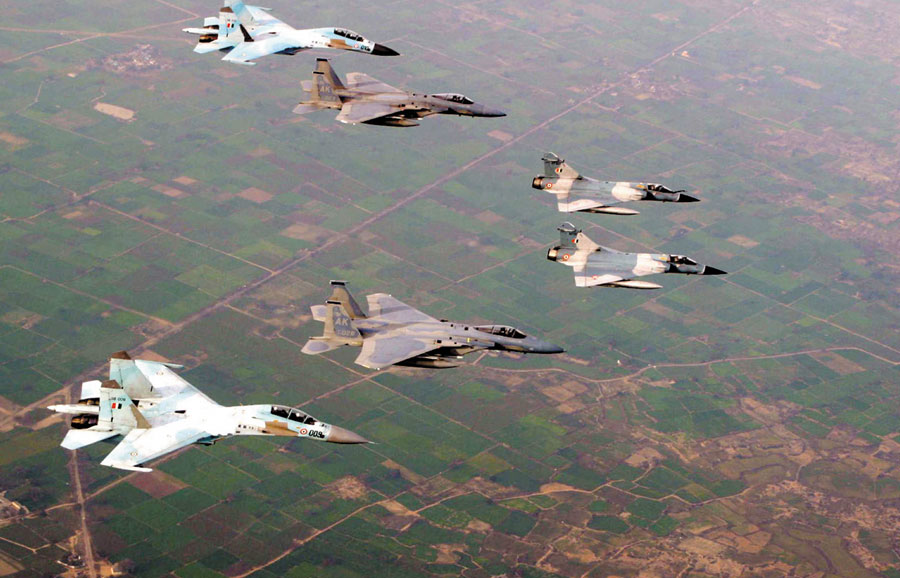
Where does India's Lies in Defense Strength among The world?

                       
The display of India’s military strength, specially the intercontinental ballistic missile Agni-V, has been highlighted by Chinese official media in Beijing.It's more difficult to weigh up the strength of modern militaries than you might think. Our infographic parade ground brings together the 30 countries with the most soldiers for a comparison of military might. China easily takes an unsurprising first place with 2.2 million active troops versus just under 1.5 million US soldiers. But are India (1.3 million soldiers) and North Korea (1.1 million troops) really the third and fourth greatest military powers on the planet?
India
4
 MANPOWER
 Total Population: 1,220,800,359 [2013] 
 Available Manpower: 615,201,057 [2013] 
 Fit for Service: 489,571,520 [2013] 
 Reaching Military Age Annually: 22,896,956 [2013] 
 Active Frontline Personnel: 1,325,000 [2013] 
 Active Reserve Personnel: 2,143,000 [2013]
 LAND SYSTEMS 
Tank value includes MBT, light tanks and tank destroyer systems, wheeled or tracked.
 Tanks: 3,569 [2013] 
 Armored Fighting Vehicles: 5,085 [2013] 
 Self-Propelled Guns: 290 [2013] 
 Towed Artillery Pieces: 6,445 [2013] 
 Rocket Projectors (MLRS): 292 [2013]
 AIR POWER
Includes fixed-wing and rotary-wing aircraft from all branches of service. All aircraft types accounted for including UAVs, transports, gunships, recon, naval, trainers, etc...
 Total Aircraft: 1,785 [2014] 
 Helicopters: 504 [2014]
 NAVAL POWER 
Aircraft Carrier value does not include helicopter carrier-type vessels.
 Total Strength: 184 (includes auxiliaries) 
 Aircraft Carriers: 2 [2013] 
 Frigates: 15 [2013] 
 Destroyers: 11 [2013] 
 Corvettes: 24 [2013] 
 Submarines: 17 [2013] 
 Coastal Craft: 32 [2013] 
 Mine Warfare: 7 [2013]
 RESOURCES (PETROLEUM)
 Oil Production: 897,500 bbl/day [2013] 
 Oil Consumption: 3,200,000 bbl/day [2013] 
 Proven Oil Reserves: 5,476,000,000 bbl/day [2013]
 LOGISTICAL
 Labor Force: 482,300,000 [2012] 
 Merchant Marine Strength: 340 [2013] 
 Major Ports and Terminals: 7 
 Roadway Coverage: 3,320,410 
 Railway Coverage: 63,974 
 Serviceable Airports: 346 [2013]
 FINANCIAL (in USD)
 Defense Budget: $46,000,000,000 [2013] 
 External Debt: $378,900,000,000 [2012] 
 Reserves of Foreign Exchange and Gold: $297,800,000,000 [2012] 
 Purchasing Power Parity: $4,716,000,000,000 [2012]
 GEOGRAPHY (in km)
 Square Land Area: 3,287,263 km 
 Coastline: 7,000 km 
 Shared Border: 14,103 km 
 Waterways: 14,500 km

Contributors